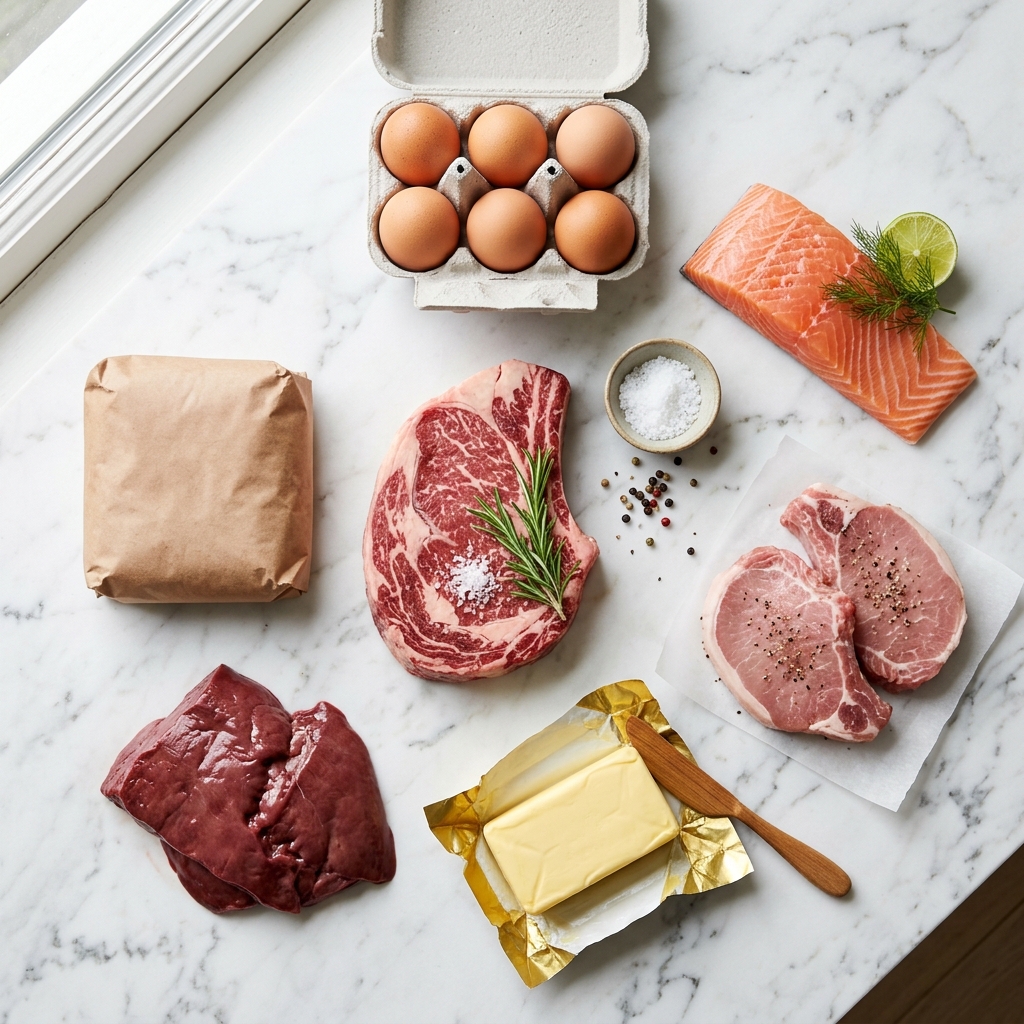
The Complete Carnivore Diet Shopping List (Beginner to Advanced)
Walking into a grocery store when you're starting an animal-based lifestyle can feel a bit disorienting. You're bypassing 90% of the aisles, ignoring the colorful packaging, and heading straight for the meat counter. If you're looking for the ultimate carnivore diet shopping list to eliminate confusion, you're in the right place. After two years of eating this way, I've learned exactly what to buy, what to skip, and how to get the best nutrition without blowing my budget.

Whether you're looking for a carnivore diet grocery list beginner guide to get you through your first week, or you want to optimize your current routine, this guide covers everything. We will break down exactly what to eat on carnivore diet, provide approximate costs, and share the exact cuts of meat that will keep you satiated and energized.
The Carnivore Diet Shopping List at a Glance
Before we dive into the details, here is a quick reference table. This represents a solid foundational weekly carnivore diet food list for one adult male (scale down slightly for females or up if you are highly active). Prices are estimated in USD and will vary based on your location and whether you buy conventional or grass-fed.
| Food Category | Recommended Cut/Type | Weekly Amount | Est. Cost (USD) |
|---|---|---|---|
| Ground Beef | 80/20 or 73/27 Blend | 4 - 5 lbs | $20 - $35 |
| Steak | Ribeye, Chuck Eye, or NY Strip | 3 - 4 lbs | $40 - $70 |
| Eggs | Pasture-raised (Large) | 2 - 3 Dozen | $10 - $18 |
| Pork/Bacon | Thick-cut Bacon (No sugar) | 1 - 2 lbs | $8 - $15 |
| Seafood | Wild Salmon or Sardines | 1 lb | $12 - $20 |
| Dairy/Fats | Grass-fed Butter or Tallow | 1 lb (4 sticks) | $5 - $8 |
Beef — The Foundation of Your Shopping Cart
If there is one rule on the carnivore diet, it's that ruminant animals (beef, lamb, bison) should make up the vast majority of your calories. Ruminants have multiple stomach chambers that ferment their food, meaning the meat they produce is incredibly nutrient-dense and has an optimal fatty acid profile, regardless of whether they are grass-fed or grain-finished.
Best Cuts for Fat Loss
If your primary goal is fat loss, you still need to eat fat—but you don't need to force-feed it. Your body will burn its own stored body fat. Good cuts include New York Strip, Sirloin, and 85/15 ground beef. These provide ample protein to maintain muscle mass while keeping overall dietary fat slightly lower, forcing your body to tap into its reserves.
Best Cuts on a Budget
You absolutely can do the carnivore diet budget style. Chuck roast is your best friend here. It’s essentially a giant, tough ribeye. If you slow-cook it or sous-vide it, it becomes incredibly tender and flavorful. Ground beef (specifically the 80/20 or 73/27 ratios) is the ultimate carnivore staple. At around $4-$6 per pound, it is the cheapest way to get high-quality protein and fat. Buying whole briskets or pork shoulders is also incredibly cost-effective if you have a smoker or slow cooker.
💡 Pro Tip: Warehouse Stores and Bulk Buying
If you are serious about this lifestyle, a Costco or Sam's Club membership pays for itself in a month. Buying whole ribeye sub-primals (the whole roast before it is cut into steaks) and slicing them yourself will save you $4 to $6 per pound. Vacuum seal them and freeze them. Buying butter in bulk and large packs of ground beef is the secret to making this diet cheaper than a standard American diet.
Organ Meats (Why You Need at Least One)
You don't have to eat the whole animal, but including beef liver once a week is highly recommended. It is nature's multivitamin, packed with Vitamin A, B-vitamins, copper, and iron. Buy a pound of calf liver (it tastes milder than mature beef liver), chop it into tiny pill-sized pieces, freeze them, and just swallow a few chunks raw like pills if you hate the taste. It costs about $4 a pound and will last you a month.
Other Meats Worth Buying
While beef is king, variety keeps the diet sustainable and provides different micronutrients.
Pork
Pork is delicious and cheap, but it is higher in Omega-6 fatty acids compared to beef. Look for thick-cut bacon that is cured without sugar (check the label carefully). Pork chops (bone-in, fat cap on) and pork belly are fantastic additions to break up the monotony of beef.
Lamb
Lamb is a ruminant, making it nutritionally superior to pork and chicken. Lamb chops, racks of lamb, and ground lamb are incredibly fatty and flavorful. Because most lamb in grocery stores (especially imported from New Zealand or Australia) is naturally pasture-raised, it's often a cleaner meat than conventional beef.
Poultry (and Why It's Optional)
Chicken and turkey are lean and lack the rich micronutrient profile of red meat. If you only eat chicken breasts, you will experience "rabbit starvation" (protein poisoning) due to a lack of fat. If you buy poultry, always buy chicken thighs with the skin on, or chicken wings. Cook them in butter or tallow to boost the fat content.
Fish and Seafood
Seafood is vital for Omega-3s and iodine. Wild-caught salmon is the best choice here. Avoid farmed salmon if possible, as their feed often degrades the Omega-3 profile. Canned sardines (in water, not seed oils) are an amazing, cheap superfood. Shrimp, scallops, and oysters are great for variety, but they are very lean, so make sure to drown them in melted butter.
Eggs and Dairy (If You Include Them)
Eggs are the cheapest superfood on the planet. Opt for pasture-raised if your budget allows, as the yolk quality is significantly better. When it comes to dairy, some carnivores tolerate it, while others find it causes inflammation, acne, or stalls weight loss. If you include dairy, stick to the fatty, low-lactose options: butter, ghee (clarified butter), heavy whipping cream, and hard, aged cheeses like Parmesan or sharp Cheddar. Avoid milk, as it is full of lactose (sugar).
What to Avoid — The "Looks Carnivore" Trap
Just because it's meat doesn't mean it's optimal. Here is what to avoid on your shopping trips:
- Deli Meats: Most are pumped full of carrageenan, modified corn starch, sugar, and preservatives.
- Sausages: Unless you get them from a local butcher who only uses meat and salt, commercial sausages almost always contain corn syrup, MSG, and wheat fillers.
- Meat in Sauces: Pre-marinated meats at the counter are almost entirely soaked in soybean oil and sugar.
- Seed Oils: If you buy canned fish, ensure it is packed in water. Avoid tuna or sardines packed in soybean, canola, or sunflower oil.
🛑 What I Wish I Knew When I Started
I wish I knew that I didn't need to force myself to eat grass-fed meat. In the beginning, I was spending $12/lb on grass-fed ground beef and stressing about my budget. The nutritional difference between conventional beef and grass-fed beef is actually quite small. The massive health benefits come from eliminating processed carbs and seed oils, not from whether your cow ate grass for its last 3 months of life. Buy the meat you can afford and enjoy the process.
Sample Monthly Budget Breakdown
Let's look at the actual numbers. Many people think they can't afford this diet until they realize they are no longer buying snacks, vegetables, fruits, grains, or eating out as much.
The Budget Carnivore ($250 - $350 / month)
- Staples: 80/20 Ground beef, chuck roasts, eggs, butter, pork chops.
- Strategy: Buying in bulk, looking for manager markdowns, cooking everything at home.
The Premium Carnivore ($500 - $800 / month)
- Staples: Grass-fed Ribeyes, New York strips, wild-caught salmon, raw dairy, pasture-raised eggs.
- Strategy: Supporting local regenerative farms, prioritizing premium cuts and optimal fatty acid profiles.
How to Store Carnivore Foods to Minimize Waste
When you are buying large quantities of meat, storage is critical. Invest in a vacuum sealer; it will extend the freezer life of your meat by years, preventing freezer burn. When you buy bulk ground beef, portion it into 1-pound bags, flatten them out (so they thaw faster), and stack them in the freezer. Keep a rotating stock: take tomorrow's meat out of the freezer and place it in the fridge the night before.
If you have the space, buying a standalone chest freezer is one of the best investments you can make on this diet, allowing you to buy quarter or half cows directly from local farmers at a massive discount.
FAQ
How much does carnivore diet cost per month?
The cost varies wildly based on your choices. A budget approach focusing on ground beef, eggs, and chuck roasts can cost as little as $250 to $350 a month per person. A premium approach with daily ribeye steaks and wild seafood can easily exceed $700 a month. Most people find they actually save money because they eliminate alcohol, snacking, and dining out.
Can I do carnivore diet on a budget?
Yes. Ground beef (73/27 or 80/20) is highly nutritious and very inexpensive. Eggs are a cheap source of perfect protein and fat. Buying large roasts (like chuck) and slow-cooking them makes tough, cheap meat tender and delicious. Buying in bulk from warehouse stores also drives the cost down significantly.
Is frozen meat OK on carnivore diet?
Absolutely. Freezing meat does not significantly degrade its nutritional value. In fact, buying meat in bulk on sale and freezing it is the primary strategy for keeping the carnivore diet affordable. Just ensure you thaw it properly in the refrigerator rather than microwaving it to preserve the texture.
How much meat should I buy for one week?
A good rule of thumb for a starting adult is roughly 2 pounds of meat per day. Therefore, for a week, aim for about 14 pounds of meat total. You might eat slightly more or less depending on your size, activity level, and the fat content of the meat, but 14 pounds is a safe baseline to ensure you don't run out of food.
Make Shopping Effortless
Tired of trying to calculate exactly how much meat you need for your goals? Let our system build your customized meal plan and generate your exact shopping list instantly. Generate your custom carnivore plan here.